
The Wink & Wow Report
https://sportliterate.org/wp-content/themes/osmosis/images/empty/thumbnail.jpg 150 150 bjj-sportliterate bjj-sportliterate https://secure.gravatar.com/avatar/592f60292ffae558017e7047d039bebe88be7eca3a999965f3a7f0501ad82d49?s=96&d=mm&r=gThe Wink & Wow Report:
Season 1, Episode 1
by Ben Giamo
Wink: Well, it’s time.
Wow: And how!
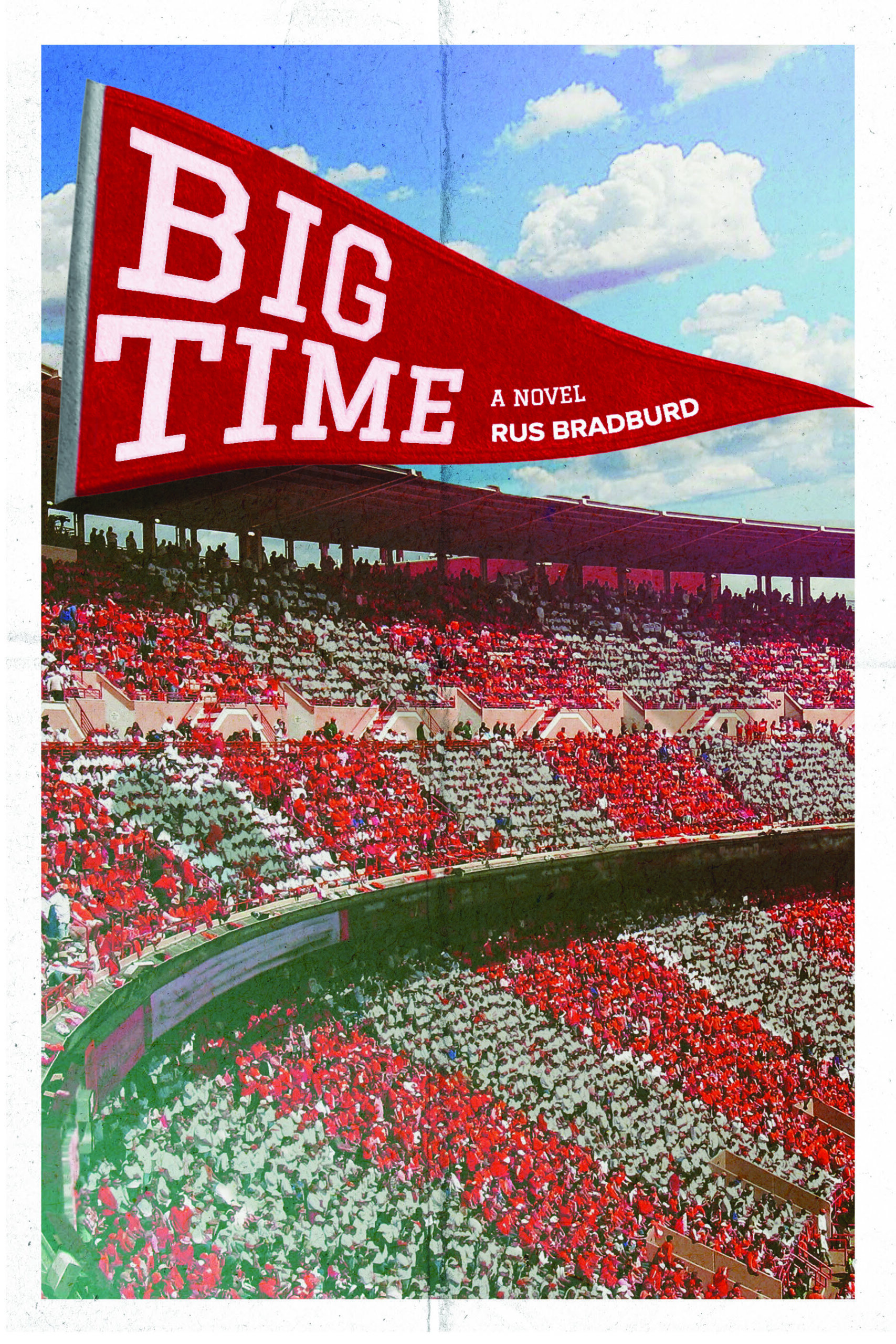
Wink: As I was saying, it’s time for another round of Big Time College Football.
Wow: Hard to believe. I’ve been waiting with bated breath ever since the big game last January.
Wink: Yes, that final matchup settled things. For the time being.
Wow: And then they start up all over again.
Wink: Indeed. We all had to wait for seven long, agonizing months before the Big Bang boomeranged.
Wow: I’m apoplectic. Welcome to Pregame ForePlay! We greet all of you: players, coaches, fans, faculty, administrators, alumni, boosters, gamblers, TV viewers, radio broadcast listeners, social media followers, and tailgaters — drunk, bloated, and tipsy.
Wink: Every Saturday is a Roman Holiday, and we’re here to bring it to you livestream, courtesy of YouBet.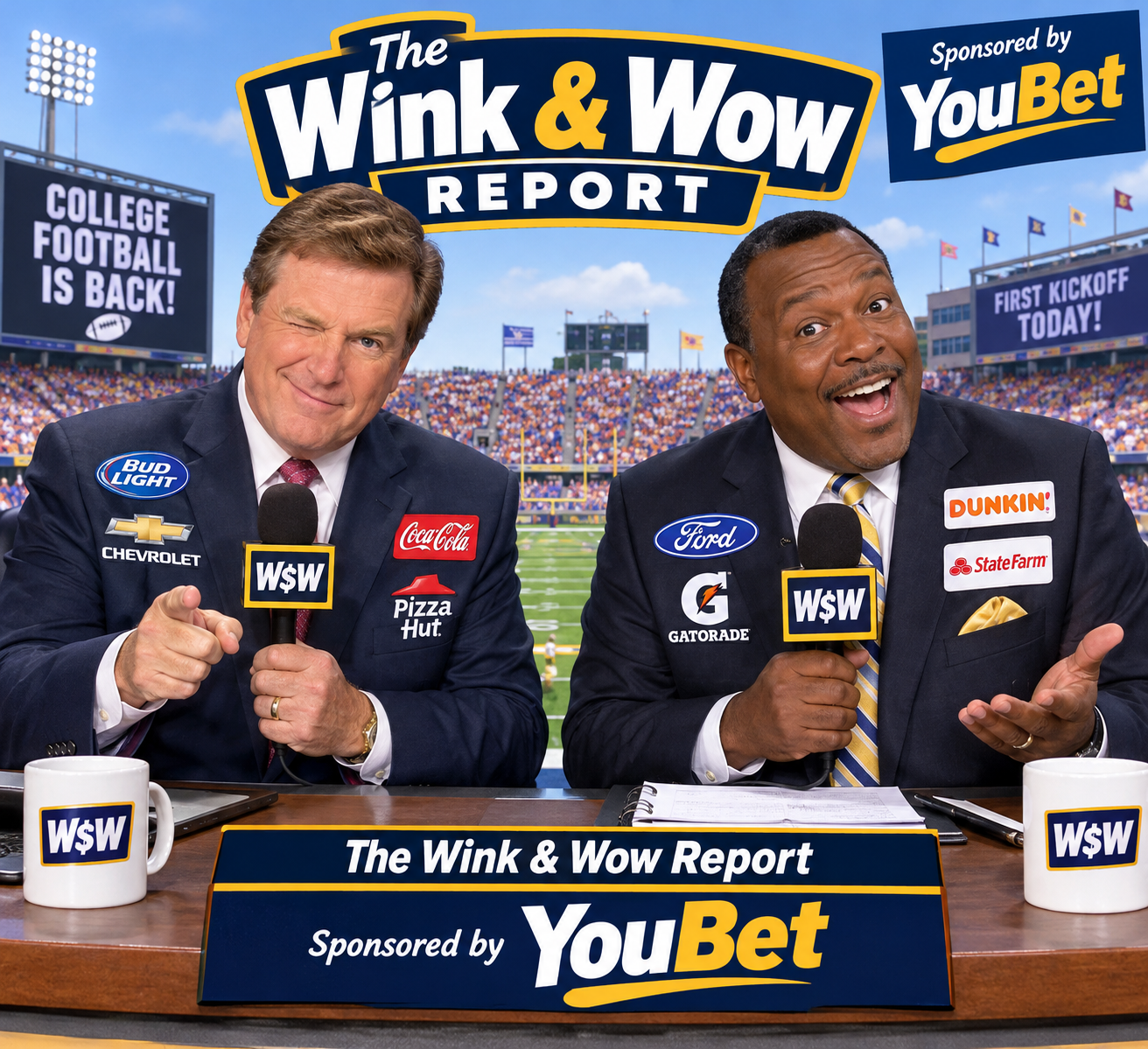
Wow: It’s a whole new ball game.
Wink: Actually, one might call it a paradigm shift.
Wow: Let’s not get too academic.
Wink: Let’s not get academic at all. I mean, what’s that got to do with anything. The university is now hereby established to serve athletics, primarily football, and, of course, endowments.
Wow: A capital idea.
Wink: That’s what I’m talking about. Money doesn’t talk, it swears. So now we not only have NIL, the Transfer Portal, and Third-Party payments to the best and the strongest, but — drumroll — direct payments to our beloved athletes.
Wow: Cold, hard cash. It makes the world go round.
Wink: And it makes the idea of the university sustainable.
Wow: The sky is the limit.
Wink: And the result is parity. Of course, you’ve got to pay up to play up.
Wow: That’s the spirit.
Wink: I mean it’s only logical.
Wow: It’s pure reason.
Wink: As pure as money can buy. You know, the top ranked football teams spend the most money for their respective rosters. And, in the year of our Lord 2026-2027, schools in the Power-Four Conferences are allowed to spend up to 21.58 million directly to support their elite athletes. But wait, there’s more: 82% of Division I universities have chosen to opt in to this revenue sharing arrangement. Sadly, there’s much less revenue to go around for most of these schools.
Wow: As you say, you pay to play.
Wink: Well, let’s face it. These lower-revenue schools must find a way. Compete or get beat.
Wow: When there’s a will, there’s a way. Tough it out. You know, this country was built on competition, the free market, innovation, and investment. The puny colleges and universities must step up to the challenge.
Wink: It’s survival of the fittest. Capitalism always finds new markets. Soon, private equity will own the majority share of athletic departments.
Wow: Imagine the equality that equity will bring.
Wink: Parity will soon extend to the top 25, and soon enough to the top 50.
Wow: Oh, what a wonderful world it will be.
Wink: Just think of the odds, the over/under, the huge betting profits, hooking ever more fans with skin in the game.
Wow: Not to mention the huge TV contracts.
Wink: And with the boundaries between pro and amateur eroding, we will have a very fluid situation.
Wow: How enriching! We’ll all benefit from the monumental feats of champions, financial and otherwise.
Wink: As football programs become a thing of the past, the urgency of teams will take precedence.
Wow: It’s like magic. Poof: each year a new team appears. A real challenge for the coaching staff.
Wink: With an average of 15 to 30 new transfers per year spilling from the Portal onto any one school’s gridiron, coaches will have to mesh the new players with the old.
Wow: And the old will become new somewhere else.
Wink: Coaches must stitch it together. They must bob and weave so to speak.
Wow: I can’t wait to see what happens. How offenses and defenses come together for the glory of gory.
Wink: Teamwork, my friends. Good old teamwork.
Wow: Well, let’s get started.
Wink: Game on.
Wow: I’m all in.
Wink: So too our viewers, I trust.
Wow: You pays your money, and you takes your chances.
Wink: That’s the way it is in the new millennium.
Wow: The best of all possible worlds.
Wink: Here’s the kickoff.
Wow: The foot meets the ball.
Wink: And we’re off and running.
Wow: Let’s hope they play like a speeding bullet.
Wink: With violence and velocity.
Wow: One more thing.
Wink: Oh, yes. We’re under contract. Let’s give everybody their money’s worth.
Ben Giamo is professor emeritus of American Studies at the University of Notre Dame. He has published literary studies on William Kennedy and Jack Kerouac as well as books on both contemporary and historical homelessness. He is a regular contributor to Sport Literate, which ran “Played Out,” earning him a notable nod in Best American Essays.