

• A Literary Magazine | Honest Reflections on Life's Leisurely Diversions

Monthly Archives :

June 2026

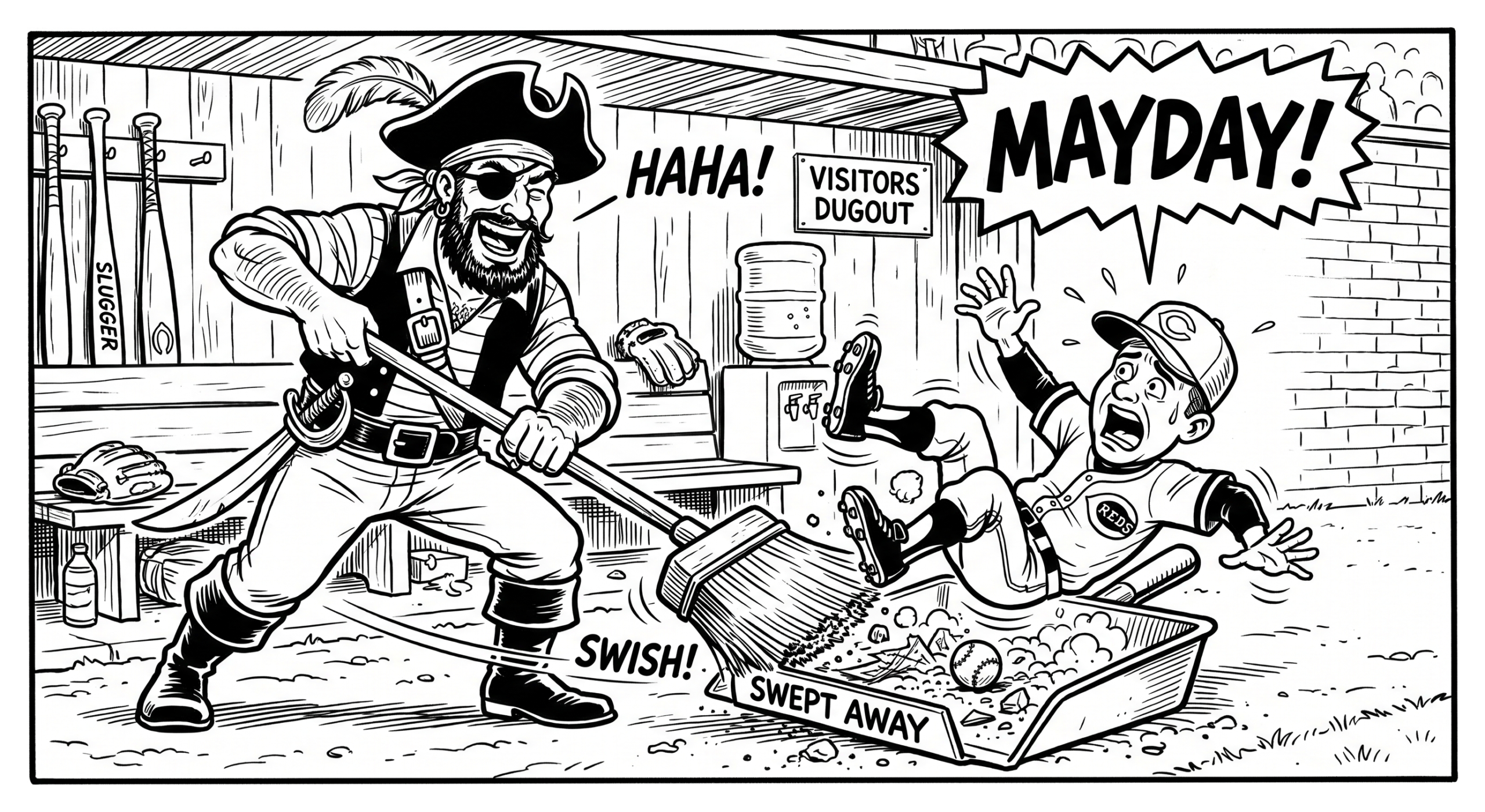
Reds Swept by Birds

150 150 bjj-sportliterate

Reds Swept By Birds

by William Meiners

My father would spend five hours each day on the same Reds baseball game. He listened to most on WLW on a concrete slab of a back porch in the nation’s “fast-growing suburb” in the decade of Nixon, streakers, and the Bicentennial. North of Indianapolis, in the Woodland Springs neighborhood with a Lakeshore Drive West address. He called it “God’s country.”

From my first memories of our shared fandom, those five hours included reading the newspaper recap and box score in the Indianapolis Star in the morning. Then he’d listen to a pre-game discussion with the manager, which would have been Sparky Anderson in the best of times, and (for a longtime), the “Star of the Game” interview afterwards with Joe Nuxhall, before the old lefthander sounded off, “rounding third and heading for home.” How many times had the young pitcher (making the Majors at 15 years old) dashed to the plate as a player?

As I approached 15, the Big Red Machine effectively disbanded, my father maintained his Reds schedule. Though we had less to say to each other, I’d inquire about the score. “No score,” he always seemed to say.

The Reds probably did a lot of not scoring through the early 1980s, even as they fielded some greats in my high school years, including Dave Parker, Tom Seaver, and Eric Davis (my favorite). Truth be told, I googled Reds greats from the decade, not wanting to miss someone. A first baseman named Terry Francona ranks 119th of 120 players. Though aside from a blowout or two, I don’t know that my dad ever soured enough on the Reds to stop listening.

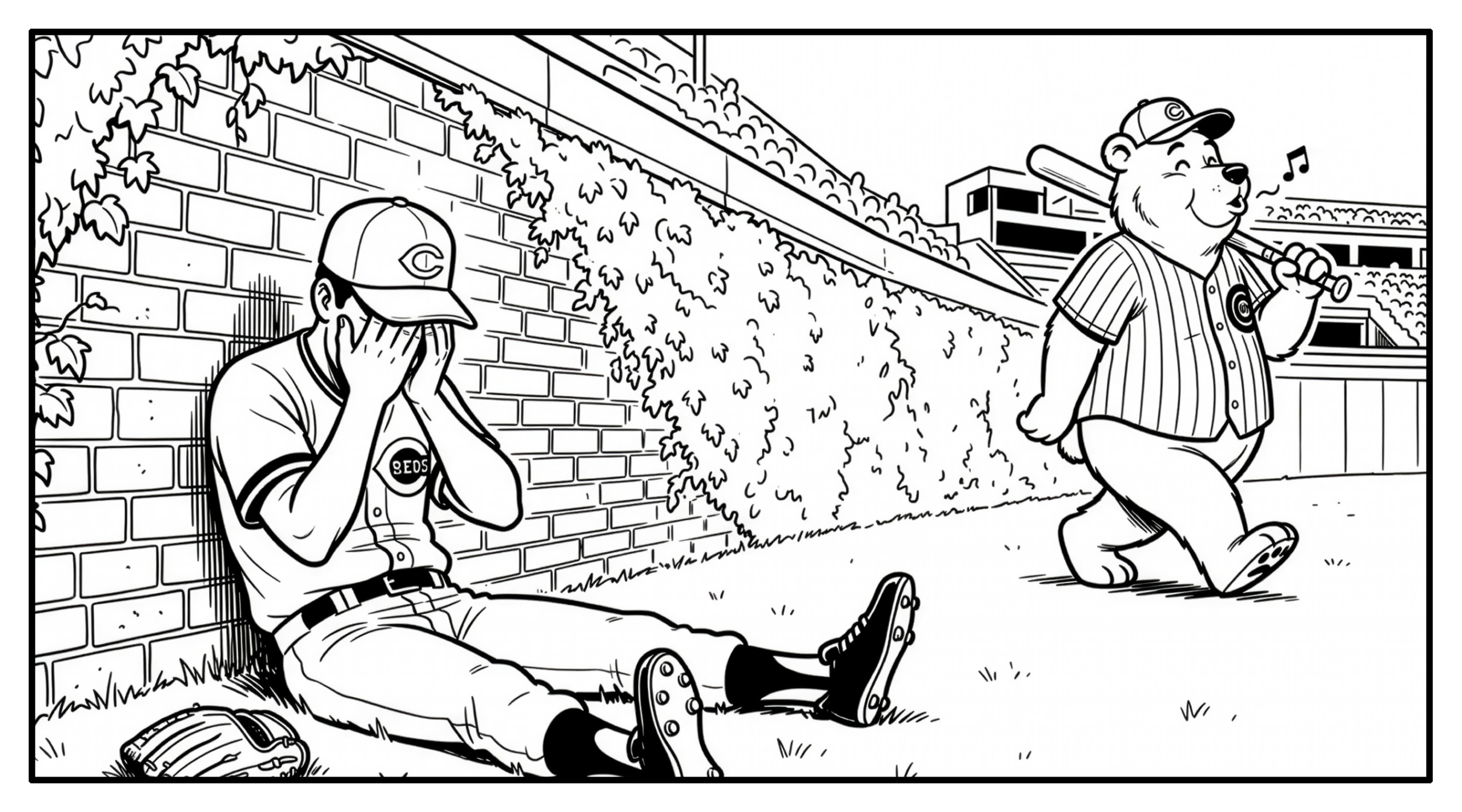
After a travel day, this version of the Reds my father would never know, arrived in St. Louis for the first time in 2026. With an even 31-31 record, the Redlegs can claim dubious achievements in the Central Division. They were swept on their first trips to Pittsburgh and Chicago — those seven straight losses that began my recaps in early May. They’d only played the Cardinals in Cincinnati, where two rainouts over Memorial Day weekend cut a four-game series in half. They split the Saturday doubleheader. And they hadn’t met the Brewers yet.
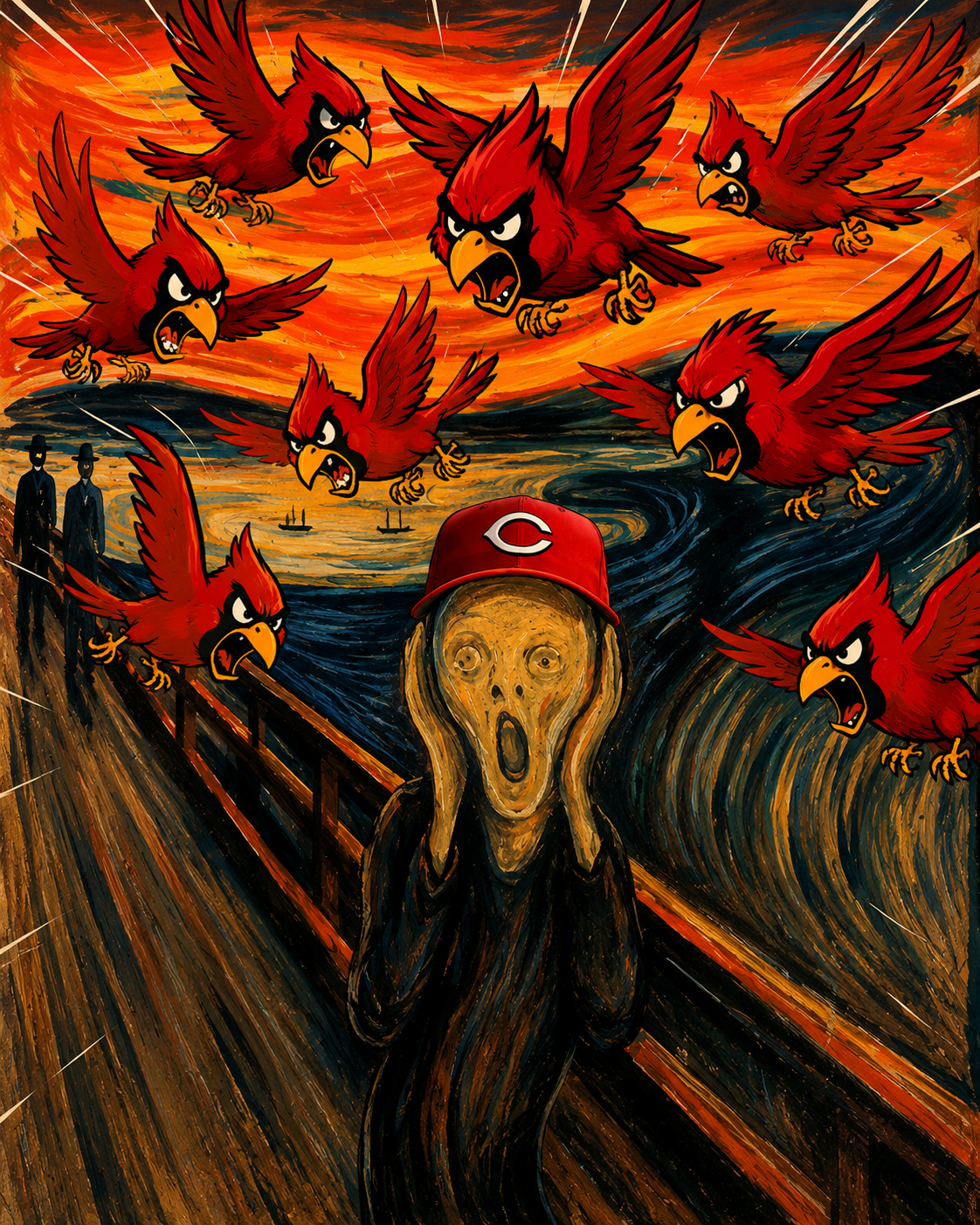
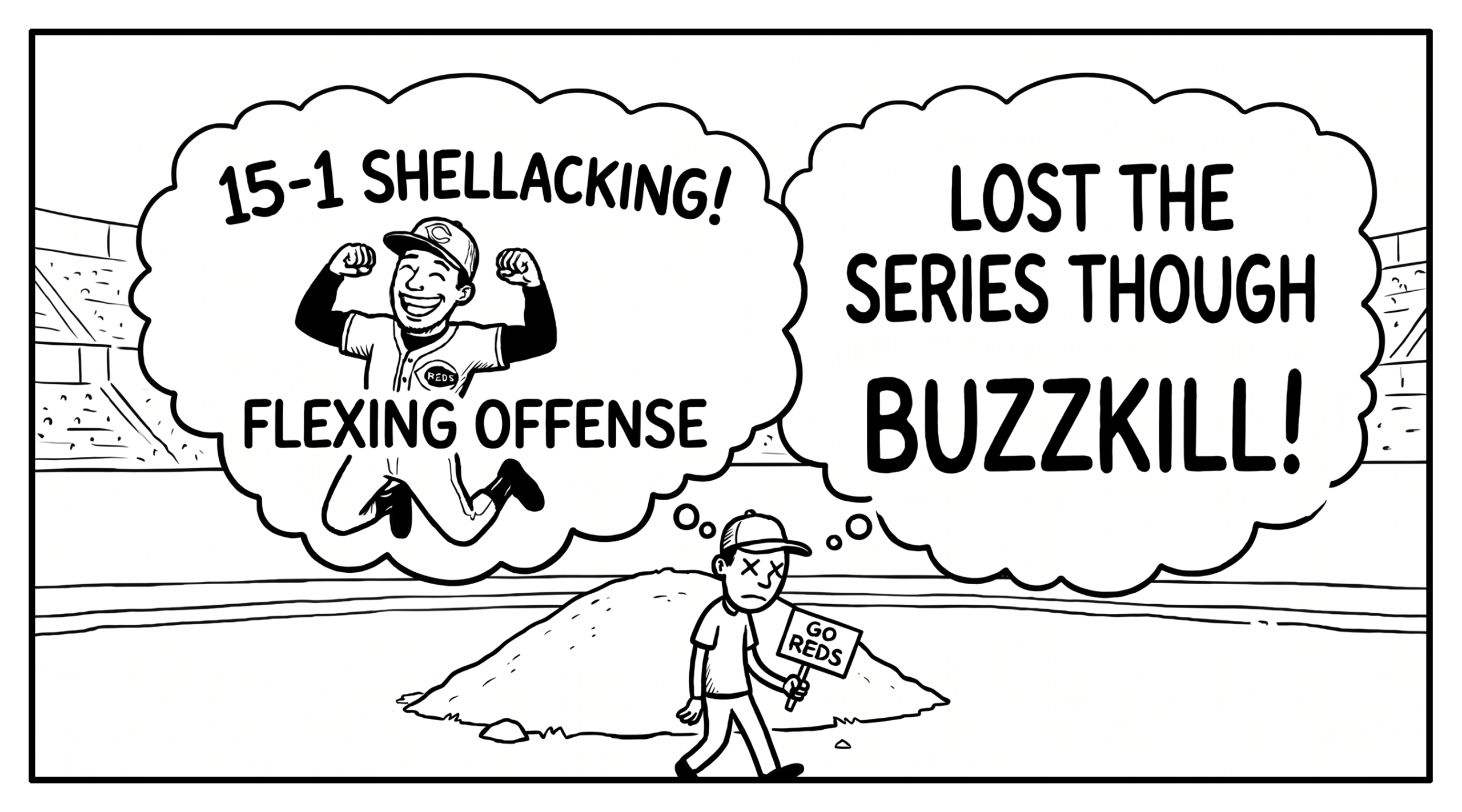
I took my son James to B-dubs for part of the Friday opener. The Reds started hot, notching three in the first. They’d score no more. Cards recovered two in the bottom of the first, scored singletons in the third and fifth to tie it, and then unloaded on the bullpen with six in the sixth. A 10-3 loss.

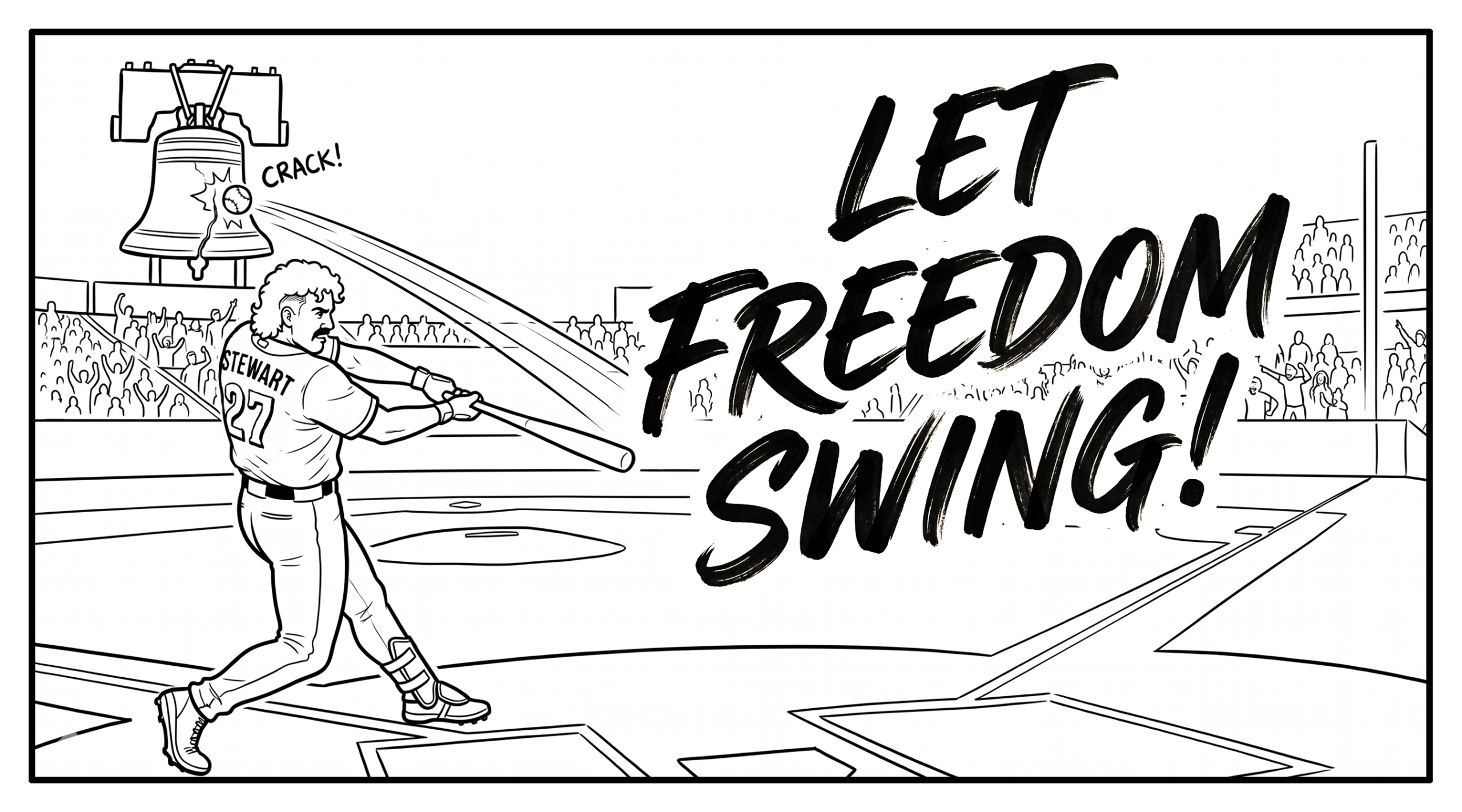
Reds played their own catchup on Saturday, matching the three the Cardinals scored in the bottom of the second with three in the third. Matt McClain’s two-run homer gave them a 5-3 lead in the fourth. The Birds drew within one in the fifth. Sam Moll served up a two-run homer in the eighth to Lars Nootbaar, who should be playing old-time hockey. Moll took the loss again on Sunday. A third straight road sweep form a Central opponent. About nine hours lost as a hopeful fan. I should quit this fucking team.

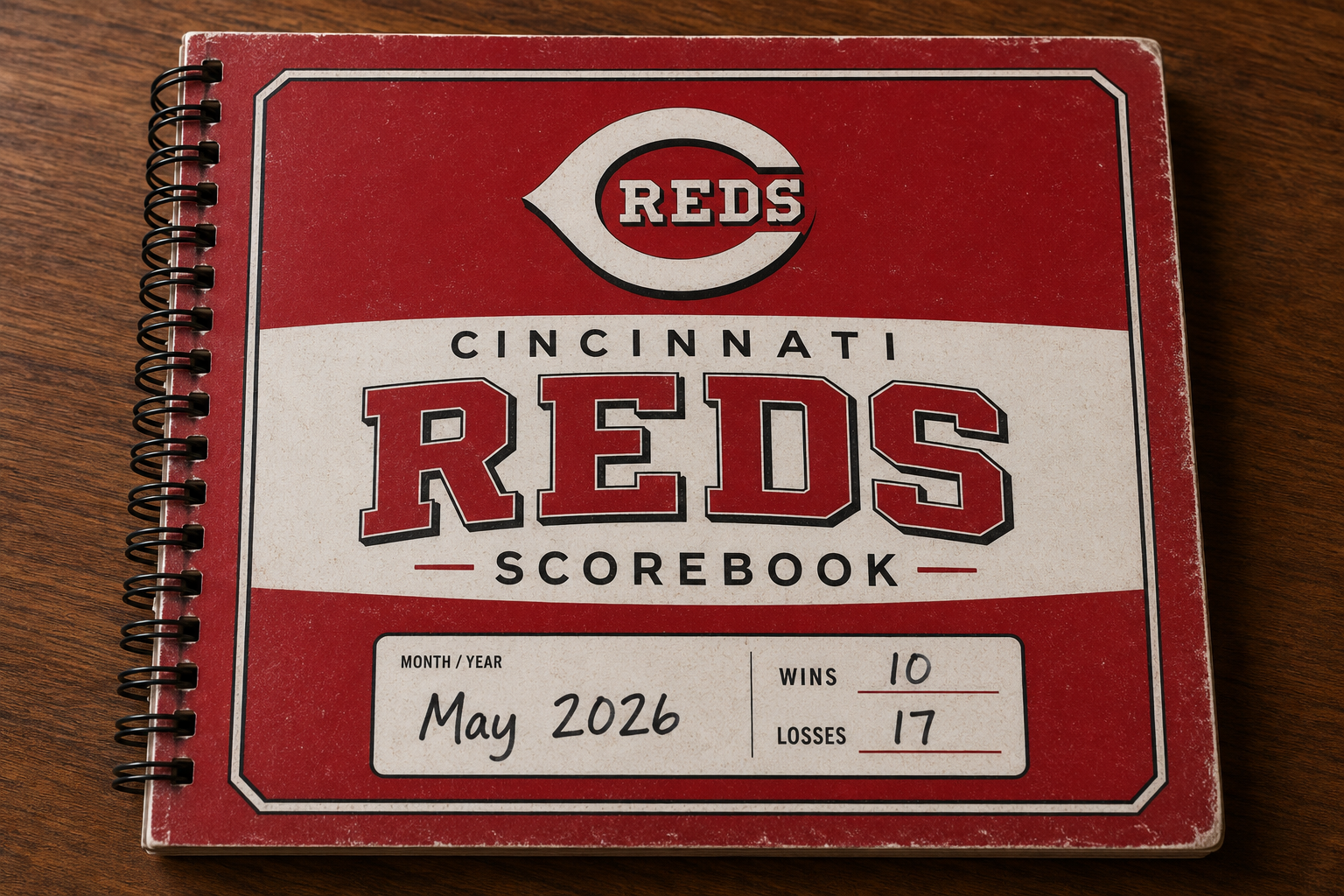
William Meiners is the editor of Sport Literate. Among his summer 2026 plans are the documentation of 33 Reds’ series. That should be about 600 to 700 words every few days. If you don’t expect too much breakdown or analysis, outside of his own troubled head, you may not be disappointed. From losing streaks through high-water marks, he’ll follow the club, sometimes literally, from the reluctant spring of early May through the dog days of August. Then he’s off to something else.
Royals Take Two of Three in Cincy as Reds Begin June Swoon

150 150 bjj-sportliterate

Royals Take Two of Three in Cincy as Reds Begin June Swoon

by William Meiners

I’ve seen the future. In no way has it helped me in betting or stock markets. I’m simply behind on these Reds recaps, today writing on the last day of June about the Kansas City matchup that began it. And I know how the Reds fared.

A longtime deadline writer, this tardiness would get me fired from any reputable paper. But running out of steam on a tail-spinning ball club in late May, I’m not sure who’s reading anyway. So I’ve returned. Like the advice for shy hoofers to “dance like no one’s watching,” I’ll press on writing like no one’s reading. Though my assumption is 10 times more likely than anyone shaking their ass near a window.

Back to the Reds, coming off a bad May who avoided a sweep by the Atlanta Braves on its final Sunday. Maybe some sign of life, and with a scuffling bunch of Royals rolling into town already 14 games under .500, the Reds, just one game over, could get healthier.

Not so. In fact, Chase Burns, the Reds best hurler, must have called in sick, keeping him off the mound for the opener. In a disastrous callup, hard-throwing Lyon Richardson, began the game walking a batter, hitting the next guy, coaxing a popout (infield fly rule), walking a guy, then striking out a guy. With two outs, Lane Thomas hit a grand slam. They played on, but that was pretty much the game. KC won 9-2, as the Reds managed bookend runs in the first and ninth.

Tuesday, Andrew Abbott allowed three runs in the fourth. Spencer Steer homered twice — solo shots in the fifth and eighth — drawing the Reds within one. Will Benson homered in the ninth to force extras. With a wave of fans in “tarps-off” mode, swinging shirts above their uncovered upper halves, Blake Dunn singled Steer home for a walk-off win. Apparently the win took place on Ladies’ Night at the GABP, so I’d have to subscribe to Cinemax to catch the “tarps-off” highlights.

On Wednesday, a recovered Burns gave up a two-run homer in the first, but settled down, pitching six full innings without allowing anymore scoring. Dunn tied the game with his own two-run homer in the fifth. Neither team managed much of anything until Tony Santillan, still struggling, gave up three in the ninth. Game over, series lost.

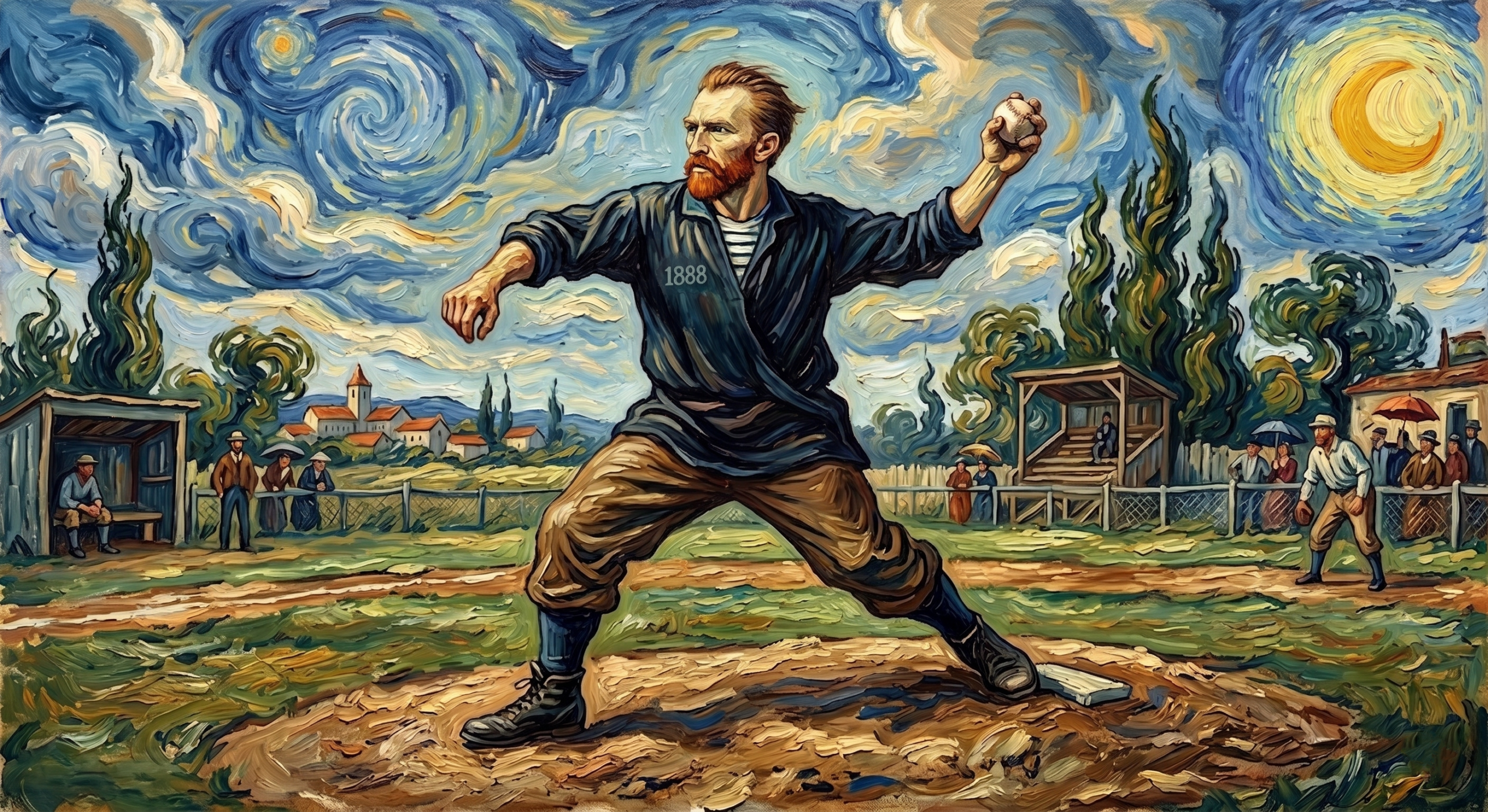
I could have watched the news. It was an off day between NBA finals. Christ, I watch enough daily news, repeated and awful, so my struggling Reds are a reprieve from our confined idiocracy. A diapered dictator is constantly droning on about “radical, leftwing lunatics.” It’s his own tic, whenever he’s mic’d up. Makes me think of “radical left-handed lunatics” and wonder about Al Hrabosky and the political leanings of a “Mad Hungarian.” There’s some debate about whether Van Gogh was left- or right-handed. He could paint, but could that lunatic pitch? We’d have to live in a fantasy league for the Reds to call him up.

William Meiners is the editor of Sport Literate. Among his summer 2026 plans are the documentation of 33 Reds’ series. That should be about 600 to 700 words every few days. If you don’t expect too much breakdown or analysis, outside of his own troubled head, you may not be disappointed. From losing streaks through high-water marks, he’ll follow the club, sometimes literally, from the reluctant spring of early May through the dog days of August. Then he’s off to something else.
May in the Books

150 150 bjj-sportliterate

First With No Second

150 150 bjj-sportliterate

First With No Second

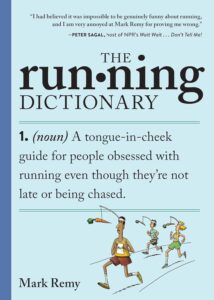
A Review of Mark Remy’s The Running Dictionary

Since the publication of The Runner’s Rule Book in 2009, Mark Remy has been a genre unto himself and a veritable font of running humor. It might not be high praise to call him the premier running satirist, if he is literally one of a kind, but high praise is what he deserves. If you are a runner who hasn’t yet read Remy, chances are his several books and his website Dumb Runner are the treasures you didn’t know you were looking for.

Find it hard to believe there could be that much funny about running? Take a minute and click on the link in the previous paragraph. Or just consider the general ridiculousness of the modern runner’s life and habits, as seen through the eyes of one with above average (i.e., >0) self-awareness. He’s an insider (2:46 marathon PR ) with an outsider’s sense of irony. Holding his exaggerated mirror up to our obsessive faces, Remy gives us the chance to laugh at ourselves — a welcome opportunity for as self-serious a group as recreational runners.

In his latest book, The Running Dictionary, Remy finds a new form in which to fit his wits: the definition. Non-running English speakers will know the automobile as “A powerful, motorized multiton steel vehicle that provides a comfortable place for its operator to watch online videos and check social media” but may not be aware that automobile operators will “occasionally [glance] up to tell runners that they should ‘get off the road.’” Unlike drivers, Remy sees us.

Less flattering to the runner’s ego, the excesses of the running-industrial complex are ripe for Remy’s teasing. Take carbon-plated shoes, which “can cost more than twice as much as a typical pair of running shoes, yet are less durable — a combination that few runners can resist.” Before we assign all blame to Nike (“Greek goddess of marketing”), consider how runners use social media: “to share details of their latest run and to ignore posts from other runners sharing details of their latest runs.” If you can’t laugh, truth hurts.

Behind Remy’s jabs lies a compassionate ethos, described on his website and honored in his books. The Dumb Runner Manifesto (in full):

1. Running should be simple. Period.
2. There is beauty in every run, if you take the time to look. Music, too, if you listen for it.
3. Laughter is good. So is pie. More of both, please.

Laughter indeed (you’re on your own for pie). Even the most circumspect reviewer is tempted to quote the book pretty much in whole or at random:

Beginner: Someone who is new enough to the sport to feel insecure about how fast and how far they run, because they haven’t yet learned that other runners are too busy worrying about their own pace and mileage to care about anyone else.

Boston qualifier (BQ): 1. A marathon time that’s fast enough to allow entry into the famously selective Boston Marathon. 2. Any word or phrase used to modify the meaning of Boston, usually by those who are unable to meet the marathon’s time standards — e.g., “the hugely overrated Boston Marathon.”

Running should be simple. But few things are simple where the ego is concerned. Thank the running gods we have Mark Remy to keep us honest.

Scott F. Parker is the author of Run for Your Life: A Manifesto and The Joy of Running qua Running, among other books. His writing has appeared in Runner’s World, Running Times, Tin House, Philosophy Now, The Believerand other publications. He teaches at Montana State University and is the nonfiction editor for Kelson Books.

Homer-Friendly GABP Hospitable as Braves Take the Series

150 150 bjj-sportliterate

Homer-Friendly GABP Hospitable as Braves Take the Series

by William Meiners

Off their shortest road trip to date, the Reds returned home from New York hovering two games over the even mark. Unfortunately, the Atlanta Braves, boasting baseball’s best record, rolled north for three games to end a woeful May in the Queen City.

Ronald Acuña Jr. hit Chris Paddack’s fourth pitch of the game over the fence. The Braves added three more in the second without benefit of a long ball. A pair of solo homers by JJ Bleday and Nathaniel Lowe made things interesting. Then Sal Stewart’s two-out single brought the homeboys to within a run at 3-4.

The sixth-inning box score for Yunior Marte, a pitcher just up from AAA not long for the big club, is noteworthy. In one third of an inning, he gave up three hits, one walk, and four runs… all accounting for an E.R.A. of 108.00. Not what you want on your baseball card. That 8-3 score held up as the Reds put up goose eggs in their final four frames.

Saturday sucked, too. Bleday homered in his second straight game, this time with Spencer Steer aboard, giving the Reds a 2-1 lead after two. An offseason pickup who started the season in Louisville, Bleday is one of two unexpected outfielders, along with Blake Dunn. In fact, one promising endnote to May was the 28-year-old being named the National League Player of the Month. Among his achievements… a .301 average, eight homers, and 25 RBI.

But Bleday’s two RBI was the last scoring for the Reds on May 30th. With his “anything you can do” walkup song (not true), Acuña Jr. hit two more homers, both times pounding his chest as he rounded first base. Including his two, the Tomahawk Chop crew hit four solo homers in innings three, five, seven, and nine. For numerology fans, that’s some symmetry to ponder.

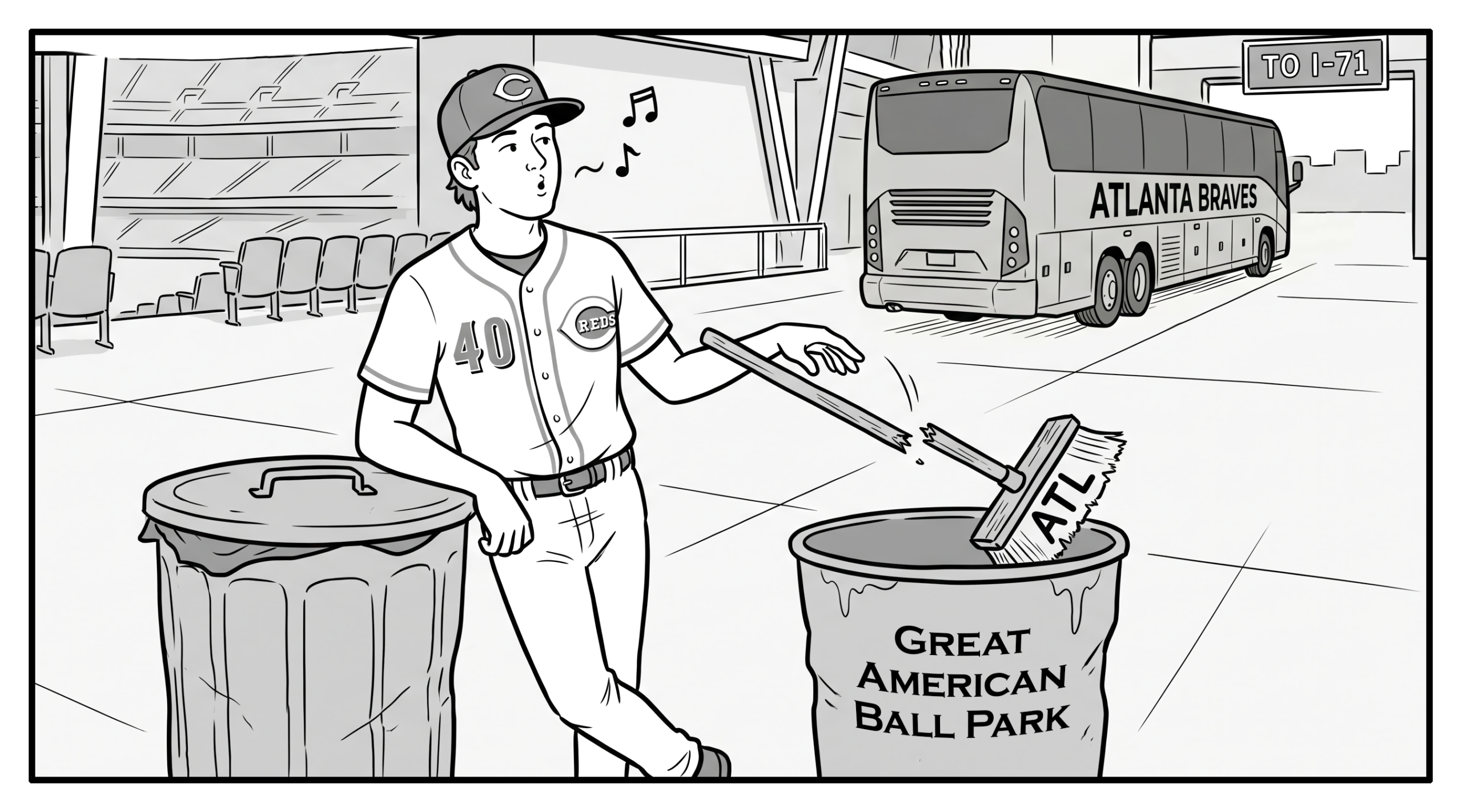
The Reds made a deep season run of not getting swept in 2025. Not so much in 2026 as they were swept by Pirates and Cubs on early May road trips. But they haven’t been swept at home since August 2024. The bullies with the racist mascot looked poised to fly out of town on brooms.

Acuña Jr. wasted even less time, hitting Nick Lodolo’s first pitch into the Sunday crowd in faraway fair territory. Who else but Bleday brought the Reds even in the bottom of the first with a double that scored Elly De La Cruz. That same tandem repeated themselves with Bleday’s third-inning double.

The Reds scored singletons in innings three through seven, a couple of which came on doubles misplayed in right by Acuña Jr. (he’s everywhere). The Braves kept it close with one-run innings in five, six, and nine. But the Reds held on with Lodolo’s quality start and a better day for a bullpen held together by band aids, glue, and St. Jude. With the bases jammed and two outs in the ninth, Sam Moll coerced a grounder to third to secure the 6-4 win. Mercy!

William Meiners is the editor of Sport Literate. Among his summer 2026 plans are the documentation of 33 Reds’ series. That should be about 600 to 700 words every few days. If you don’t expect too much breakdown or analysis, outside of his own troubled head, you may not be disappointed. From losing streaks through high-water marks, he’ll follow the club, sometimes literally, from the reluctant spring of early May through the dog days of August. Then he’s off to something else.
Thanks, Gil

150 150 bjj-sportliterate

Thanks, Gil

by Scott Bandremer

Oh no.
Another Knicks video just landed in my feed.
Somebody’s showing Game 5 again. Somebody else is filming grown men weeping in the streets of Manhattan.
Another guy is hugging complete strangers like he’d just been rescued from a deserted island.

And now they’re playing Sinatra.

Stop. Please stop.
I have no more tissues.
My New York Knicks are NBA champions. World Champions!
Even now, typing those words feels vaguely illegal, like I should look over my shoulder before publishing them.
For 53 years I lived with a simple understanding of the universe: the Knicks were not going to win a championship again. Ever.
That wasn’t pessimism. That was data.
I had decades of evidence. Entire presidential administrations came and went. Technologies were invented, became obsolete, and disappeared.
I got older. My hair got thinner. Ticket prices became the GDP of a small nation.
And still, no championship.

Eventually, disappointment becomes part of your identity. Knicks fans don’t merely root for a basketball team. We major in hope while minoring in heartbreak.
Then the impossible happened.
The Knicks won.
And here’s the strange part: I knew exactly how to handle losing. I’d been practicing since Richard Nixon was president.
What I wasn’t prepared for was winning.
Now every video sends me spiraling.
Every highlight reel feels personal.
Every replay unlocks some forgotten room in my memory.
To quote Jackson Browne, “Here come those tears again.”
I find myself sitting in the middle of this beautiful emotional hurricane, dazed and grateful and more than a little confused.
Because somewhere beneath the celebration, another memory keeps tugging at me.
The last time New York sports made me feel this way was when I was a kid. Oh, the Mets championship in 1986 was very special, indeed.

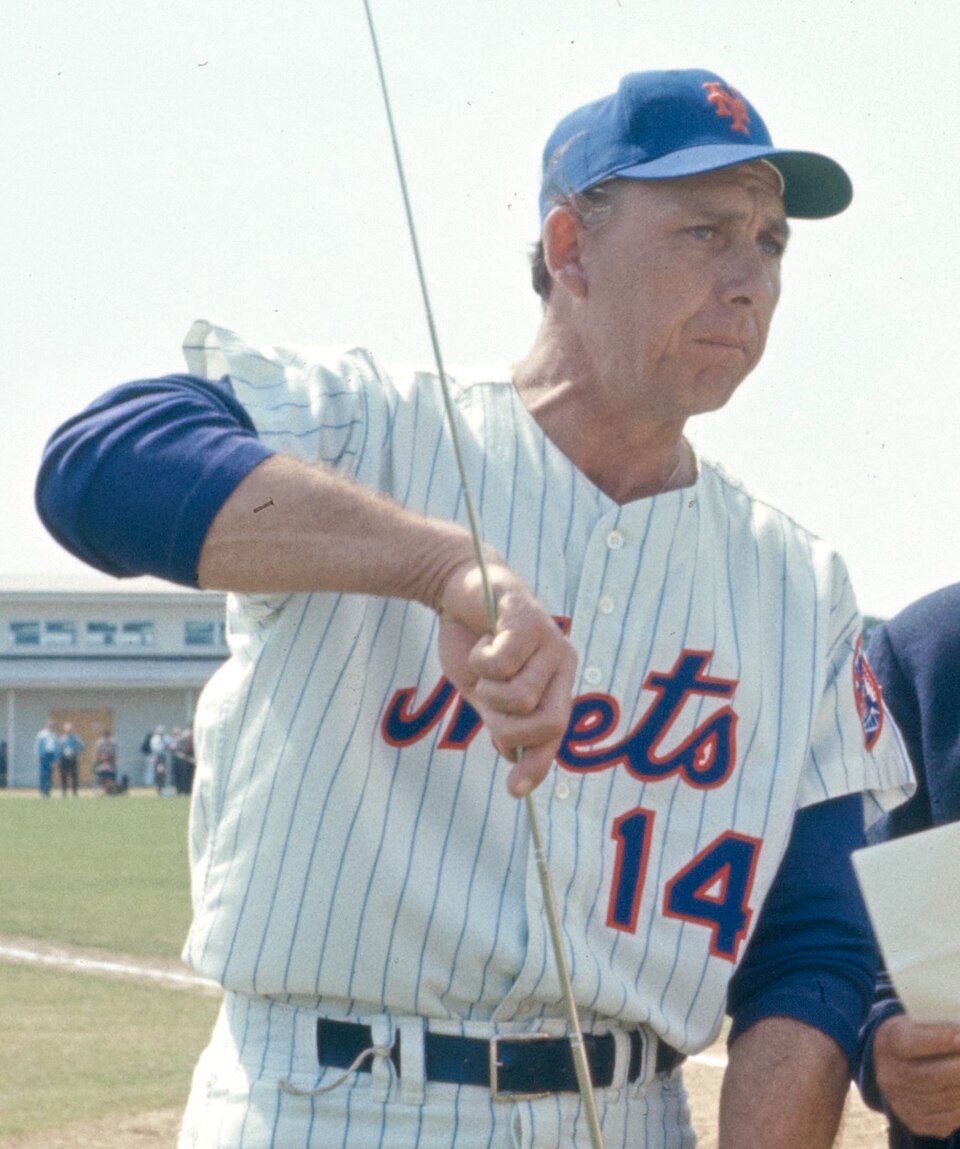
Hall of Famer Gil Hodges (Class of 2022) was a slugging first basemen for both the Brooklyn and Los Angeles Dodgers. After his playing days, he returned to New York, managing the “Miracle Mets” to the 1969 World Series title.

But this feeling I now have is something else.
Something that is drawing me back in time, as I close my eyes and begin to float away on a magic carpet ride deep into my past …
And suddenly I’m drifting backward through the decades. Back to a time of innocence. Back to the losing ways of the New York Jets, the New York Knicks and the New York Mets.
Back to a man named Gil Hodges who taught me something about heroes long before I understood the lesson.

Spring, 1969. I was almost 9 years old, living in the geographic center of my universe: Flatbush-Midwood, Brooklyn.
Our apartment building sat on Kenilworth Place directly across from Brooklyn College, surrounded by fraternity houses, single-family homes, and the sort of neighborhood characters that gave Brooklyn its PhD in personality.
From our kitchen window, I could watch history happen and then be home in time for dinner.

It was a different era, which is a polite way of saying our parents had a remarkably relaxed definition of child supervision.
At 5 years old, I walked three blocks alone to kindergarten at P.S. 152, passing Brooklyn College on one side and Midwood High School on the other. My educational future was basically laid out like a subway map.
My younger brother and I rode our bikes everywhere — through the college campus, down side streets, wherever curiosity pointed the handlebars.

Meanwhile, the late 1960s raged around us.
Anti-war protests regularly marched beneath our apartment windows. Thousands of demonstrators would flood Campus Road, chanting and carrying signs against the Vietnam War.
Even as a kid, I could feel the electricity in the air. Something important was happening. I wasn’t entirely sure what it was, but I knew it mattered.
Still, at the end of the day, I was nine.
And like many 9-year-olds, I had more pressing concerns.
Specifically, my terrible taste in sports teams.
I rooted passionately for the Mets, Jets, and Knicks — a trifecta of disappointment so reliable it should have come with a warranty. Somehow, probably through my father, who expressed most of his emotions through sports scores, I became hopelessly attached.
I watched every game on our black-and-white television. I memorized rosters. I collected trading cards with the intensity of a Wall Street investor building a portfolio.
For the record, I was once potentially worth millions (maybe).
My mother accidentally destroyed that possibility by throwing away roughly 2,000 football cards from 1968 while I was away at college.
Whenever people ask why I don’t own a yacht today, that’s the answer.
I knew every Met by heart: Tom Seaver, Cleon Jones, Tommie Agee, Jerry Koosman, Jerry Grote. I could probably have recited the batting order faster than I could complete long division.

Then, something miraculous happened.
Actually, three miraculous things.
Joe Namath guaranteed and delivered a Super Bowl for the Jets in 1969.
The Knicks won an unforgettable championship in 1970.
And amidst all of that, in the greatest sporting upset my young brain could comprehend, the Mets won the World Series in 1969.
The Miracle Mets.
For a kid who had invested emotionally in three chronic underachievers, this felt less like sports and more like proof that the universe occasionally rewarded loyalty.
I was living in fan paradise.
Then, two years later, reality showed up.

In April of 1972, Gil Hodges died suddenly of a heart attack.

I was almost 12 years old.
Until then, death had mostly existed as an abstract concept adults talked about. Suddenly it wasn’t abstract anymore.
One day Gil Hodges was managing the Mets. The next day he wasn’t.
Gone.
I remember being stunned. Not just sad but confused. How could someone be there one day and disappear the next?
My mother tried to comfort me, but I kept thinking about something else entirely:
Who was going to manage the Mets?
It’s amazing how childhood grief and childhood priorities can occupy the same space.

When I learned Gil’s funeral would be held at Our Lady Help of Christians Church on Avenue M, I made a decision.
Actually, my friend and I made a decision.
We were going.
This was no small undertaking.
Sure, kids had freedom back then.
We played stickball, punchball, basketball, and rode bikes until the streetlights came on — or until my mother’s voice, somehow capable of traveling several city blocks without technological assistance, summoned me home for dinner.
But Avenue M felt far away. Practically another borough.
Still, how could we not go?

So, without informing my parents of our expedition — which felt like a detail best shared afterward — we hopped on our bikes and headed off.
When we arrived, it looked like all of New York had the same idea.
The streets were packed.
The line stretched forever.
And there I was: a nice Jewish kid from Brooklyn about to enter a church for the first time in his life.

I had absolutely no idea what I was doing.

As the line moved forward and we entered the church, I stopped cold.
Standing only a few feet away were some of the biggest sports legends I’d ever seen.
There was Bud Harrelson. Tommie Agee. Tug McGraw.
Then I saw Pee Wee Reese. Jackie Robinson. Sandy Koufax.
These weren’t baseball players.
These were superheroes.
At least they had been in my mind.
Then I noticed something.
They were crying.
Not quietly.
Not hiding it.
Just openly grieving.
I stood there staring.
Because this wasn’t what superheroes were supposed to do.
These men were strong. Fearless. Larger than life.
And yet here they were, mourning a friend.

For the first time, I understood something that would take many adults years to learn:
Strength and vulnerability aren’t opposites. They’re teammates.
Before I knew it, I was crying too. I couldn’t have explained why.
I just knew that if these men loved Gil Hodges enough to cry, then somehow I did too.
That moment never left me.
Neither did what happened next.

Remember, this was my first church experience. Nobody had issued me a handbook.
As the line shuffled toward Gil’s open casket — the first deceased person I had ever seen — I watched carefully.
Everyone ahead of me paused.
Many knelt briefly.
So when my turn came, I did exactly what any loyal young Mets fan would do.
I got down on one knee. Closed my eyes. Stayed there for a few seconds.
And hoped I wasn’t violating any major church regulations.
Then I stood up and moved along. Mission accomplished.

When I finally got home and told my mother where I’d been, I braced for impact.
I expected punishment. Maybe grounding.
Possibly a lecture delivered at volumes rivaling her dinner-time summons.

Instead, she surprised me.
She hugged me.
Then she told me she was proud of me for making the effort to honor someone who had meant so much to me.
At 12 years old, that felt pretty good.

The next day, my friend and I retold the adventure to anyone willing to listen.
We described every detail: the crowd, the players, the church, the tears.
Our friends listened like we’d returned from Everest.
And in our own way, maybe we had.

Looking back now, I realize that day wasn’t really about baseball.
It was about growing up. It was about discovering that heroes are human.
It was about learning that grief is simply love with nowhere to go.
And it was about taking one small bike ride that somehow ended up lasting a lifetime.

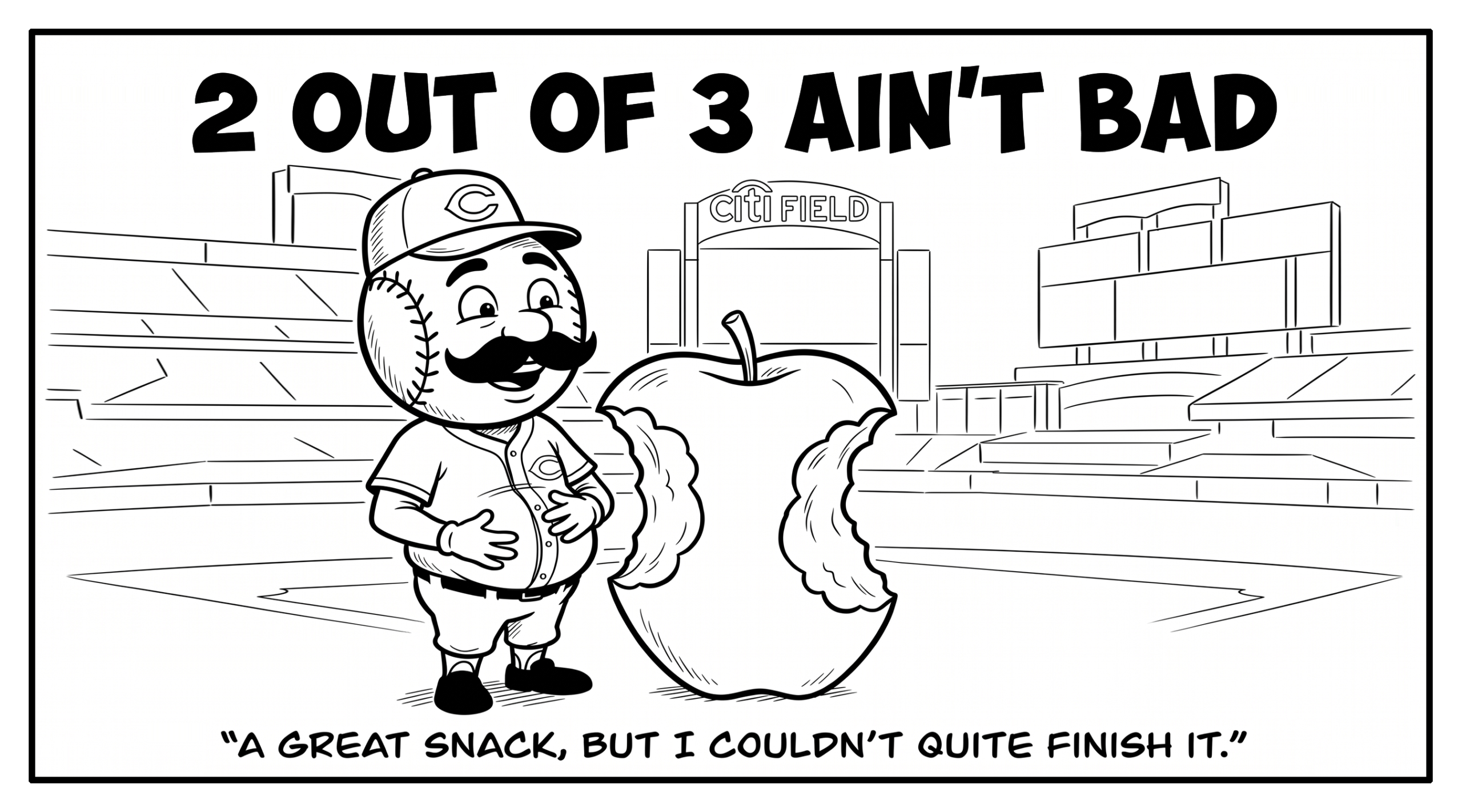
Today, when I take my grandchildren to Citi Field, I point toward the retired number 14 hanging above the ballpark.
Gil Hodges.
Our manager.
I tell them his story.
Sometimes they listen. Sometimes they’re more interested in the giant scoreboard or whatever snack costs eighteen dollars these days.
But every now and then, I catch that familiar sparkle in their eyes.
The same one I had.
The same connection to a team, a player, a moment.

And I realize that’s really what survives.
Not championships. Not statistics. Not even miracles.
What survives are the memories. The stories.
The people who mattered.

So these days I spend my time loving my grandchildren, loving my Mets, and holding onto the moments that shaped me.
The Knicks have held up their end of the bargain. Now the remaining two thirds of this sports triad need to step up.
Hopefully, years from now, my grandkids will have a few stories of their own.
Let’s Go Mets. Let’s Go Jets. And God Bless the New York Knicks.
Life is short. But memories are forever. Hold on to them tight.

Thanks, Gil.

Scott Bandremer is a writer, photographer, and digital video producer who resides in the greater NYC market. A 50-plus year devoted fan of the Mets, Knicks, and Jets, he can currently be found residing on Cloud9 as he celebrates the awesomeness of a Knicks championship.

Reds “Don’t Mind the Maggots” in a Series Win Over the Mets

150 150 bjj-sportliterate

Reds “Don’t Mind the Maggots” in a Series Win Over the Mets

by William Meiners

The heat arrived with the unofficial start of summer on Memorial Day in our central Michigan neck of the woods. Without much spring training for the high temps, it’s swimming pool days, lawn-mown evenings, and back porch grilling from here on out through late August. The fool in me wishes for a long hot summer, though I know it will pass faster than our early evening bats after mosquitoes.

The Reds late-afternoon start against the Mets began a three-game series in the sleepless city that couldn’t be further (culturally speaking) from our provincial college town. Three decades ago, I could make my way around Chicago neighborhoods. But flying into New York a few times, like parachuting into an island of buildings, made that city overwhelming to me.

Domesticated now, I listened to the game mowing my backyard in Mount Pleasant. A happy place for me these days as all my youthful tail chasing left me in a dizzying mess.

The Reds scored two in the second, J.J. Bleday added a solo shot in the third, and four in the fourth we’re all the visitors needed for a 7-2 victory. Tuesday seemingly repeated itself, albeit in different scoring fashions, as the Reds won again 7-2.

The finale should have been a sweet sweep for Cincy. And the scuffling Mets, featuring a futures lineup given a rash of injuries on a highly paid roster, lucked out. Andrew Abbott gave up home runs in the first and second innings but pitched well enough to win. Reds had baserunners all night, leaving a total of 17 men stranded. Oh, untimely deaths. In fact, Sal Stewart’s swinging bunt, with two outs and the bases loaded, brought the Reds to within one (3-2) in the sixth inning. Otherwise it was strikeouts, pop-ups, and non-stop missed opportunities.

Lance McAlister, from WLW, recaps the stats as well as anybody. Without signing up for it, Lance, a high school classmate 42 years ago, appears in my Facebook feed with a post-game take. He had a different last name in the 1980s, and we had a math class and played on a baseball team together. Perhaps a “fall ball” squad, kind of an extension of the Babe Ruth League days. I think he led off and I batted second. Or maybe vice versa. I was in my speed-bunting days, earning most of my hits dropping one down the third baseline. Lance also may have been in Chicago along with me in the 1990s as he began his career and I extended my schooling.

Back in the Big Apple, Mets closer Devin Williams stirred excitement in the ninth, walking two, fanning one, walking another (to load the bags), then striking out Dane Myers and Blake Dunn to end it. Not a single ball put in play among a shitload of pitches. Even with a series win, I suspect it’s a loss that could leave a manager sleepless. Regardless of the city, town, or madhouse where he might lay that weary head.

William Meiners is the editor of Sport Literate. Among his summer 2026 plans are the documentation of 33 Reds’ series. That should be about 600 to 700 words every few days. If you don’t expect too much breakdown or analysis, outside of his own troubled head, you may not be disappointed. From losing streaks through high-water marks, he’ll follow the club, sometimes literally, from the reluctant spring of early May through the dog days of August. Then he’s off to something else.
A Split Between Rainouts with a Reds Walk-Off Win Over Cards in Extras

150 150 bjj-sportliterate

A Split Between Rainouts as Reds Escape with Walk-Off Win Over Cards in Extras

by William Meiners

We had a fire in the house over Memorial Day weekend. Not a kitchen mishap but burning wood in the fireplace to keep us a little warmer and add some ambiance to sitting around the house, playing cards, sipping wine, whatever we do in our do-little dotage. No ear on baseball for me as the Cardinals-Reds matchup gets rained out on Friday.

Not a single team in the National League Central is under .500 going into the holiday weekend. The Cubs themselves, who greeted the Reds so angrily in the friendly confines of Wrigley in the first week of May (with a four-game sweep) have gone on a losing bender. They’ll drop 10 straight before it’s said and done to which I say, “Blow Cubs, blow.”

Forget the wild west, the central seems like that running group activity where the guy in the back has to sprint to the front of the single-line pack. A fartlek, I think, but I don’t think you can say that on television. Nevertheless, my Reds dropped from first to last in the central after an 0 for 8 start to May. Cubs, Cards, and Brewers have all surged, but that Milwaukee team (and I hate them like hell), usually rises to the top. Up until the second round of the playoffs anyway.

But I’m getting ahead of myself. The Reds, entering the weekend have played more American League teams than division opponents in 2026. Had they only been playing them, they’d be faring very well. Early in the season (late March if you can believe it), they took game one from the Pirates in a Cincy series. Then lost two straight.

Looking a bit like April road warriors, they swept the Rangers in Texas, swept the Twins in Minnesota, and took two of three in Tampa from the Rays. After a good homestand to win back-to-back series against the Tigers and Rockies, I had the great idea to document the summer in this recap thing.

Fast forward to this near end of May and they’ve lost nine straight against central foes. In the day-night doubleheader on Saturday, the Cardinals punched them in the mouth in game one. An 8-1 final. Do you really need the details? Bad pitching, weak hitting on the home team’s side. It was too cold to go to the opening day of our swimming pool, where I might have drowned myself. Ten straight losses in the division.

In the nightcap, the Reds are down 1-0, but muscle up for a five-run fifth with a three-run homer by Elly followed closely by a two-run homer by Nathaniel Lowe. Chase Petty, making a spot start for a rotation with a few guys injured or rehabbing, promptly allowed a three-run homer to Jordan Walker in the top of the sixth. So an easy win would not be in the cards. Maybe for the Cards, not for the Reds.

Cincinnati clings to a small lead, but what now seems commonplace — a long ball, a walk, and a knock courtesy of the Reds reliever — locks it up at six a piece in the ninth. Neither team scores a run in the 10th inning, which just seems like bad baseball by not moving the ghost runner on second base.

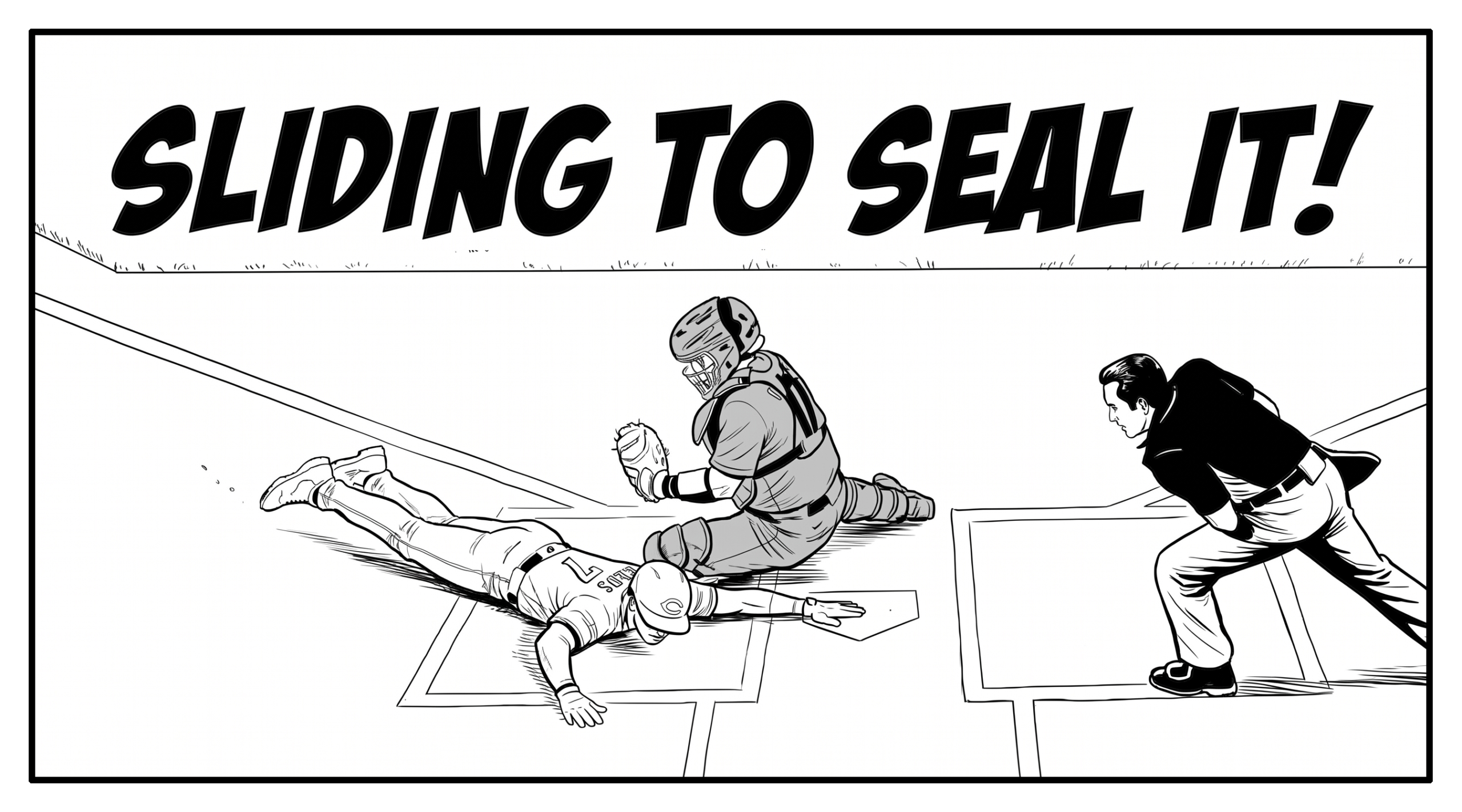
Finally, Blake Dunn hits a grounder that a drawn-in shortstop fires to the plate. Spencer Steer, our Swiss Army knife who can play first, second, third, as well as left and right field, scrambled home fast enough and dove head first under a catcher’s tag. “Reds win! Reds win!” Like a buzzer beater in basketball, there’s nothing but pure joy as an entire team gushes out of a dugout to celebrate like little boys. And I’m happy, too.

Sunday, once again, is postponed by rain, so that Saturday joy will have to sustain me.

William Meiners is the editor of Sport Literate. Among his summer 2026 plans are the documentation of 33 Reds’ series. That should be about 600 to 700 words every few days. If you don’t expect too much breakdown or analysis, outside of his own troubled head, you may not be disappointed. From losing streaks through high-water marks, he’ll follow the club, sometimes literally, from the reluctant spring of early May through the dog days of August. Then he’s off to something else.